
MIRRI-Belgium connects microbial innovation and agroecology through the AgroServ project
2026, Aug 24
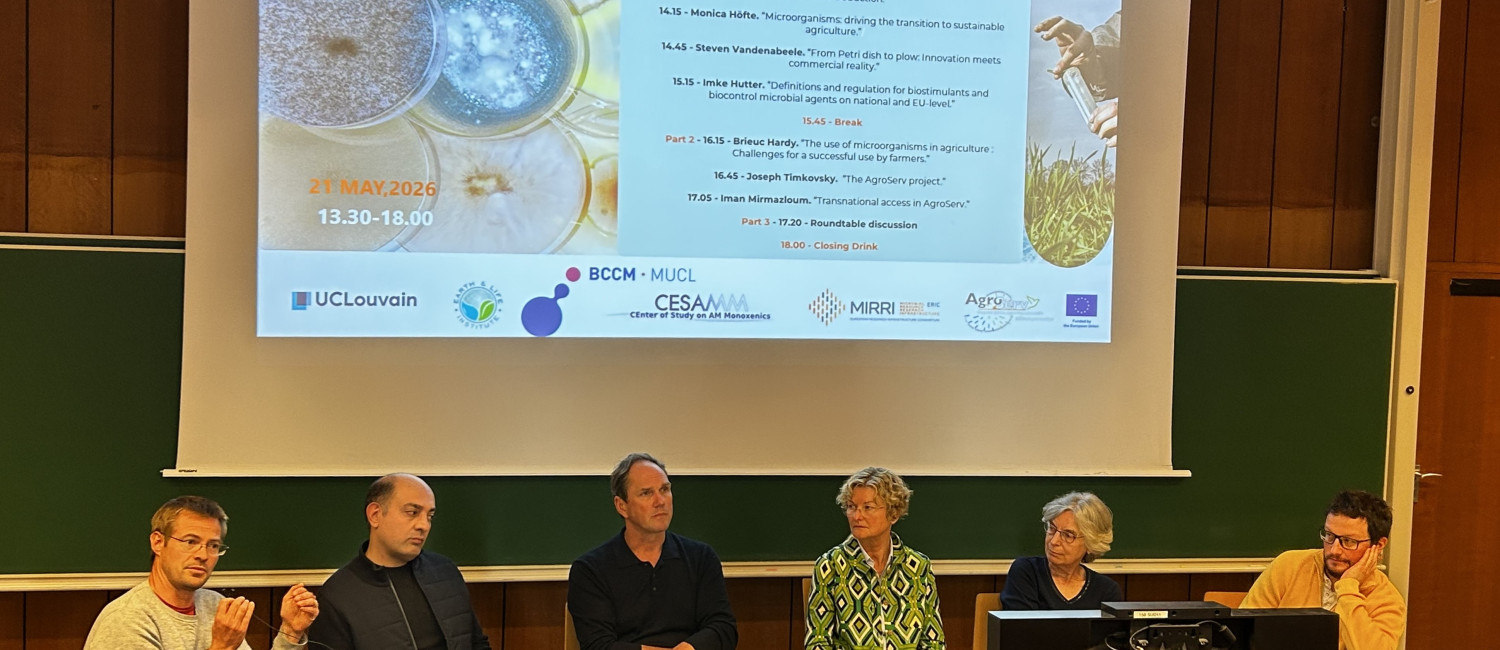
How can microorganisms contribute to more sustainable agricultural systems? This question was at the heart of the seminar "Agroecological Transition: The Role of Microorganisms", organised by MIRRI-Belgium within the framework of the AgroServ project on 21st of May, 2026.
Hosted by the Laboratory of Mycology / BCCM-MUCL (Agro-Food & Environmental Fungi), partner of the Belgian National Node of MIRRI-ERIC, the event brought together around 50 participants from academia, industry and the public sector to explore how microbial resources and innovations can support the transition towards more sustainable agriculture.
From microbial science to agricultural practice
The seminar offered a broad perspective on the opportunities and challenges surrounding the use of microorganisms in agroecology.
Stephan Declerck, from BCCM-MUCL, opened the programme by providing an overview of the historical development of agriculture and highlighting the fundamental role microorganisms can play in agroecological systems.
The scientific perspective was then explored by Monica Höfte (Ghent University), who discussed how microorganisms can drive the transition towards more sustainable agriculture. Moving from research to innovation, Steven Vandenabeele (Aphea.Bio) examined the challenges of bringing microbial solutions from the laboratory to the field and ultimately to the market.
The regulatory dimension was addressed by Imke Hutter (INOQ), who presented the definitions and regulatory frameworks surrounding biostimulants and microbial biocontrol agents at both national and European levels. Finally, Brieuc Hardy (CRA.W) focused on the practical use of microorganisms in agriculture, highlighting the challenges that need to be addressed for the successful adoption of bioproducts by farmers.
Together, these contributions illustrated the complexity of the agroecological transition and the need to connect microbial research, innovation, regulation and agricultural practice.
Connecting researchers with AgroServ opportunities
The seminar also provided an opportunity to present AgroServ and its support for the research community, specially trough the Transnational/Virtual Access (TNA/VA) calls, which provide free access to services. Joseph Timkovsky, Daniele Baldo and Iman Mirmazloum, representing AgroServ, introduced the project and highlighted the opportunities available to researchers working on agroecological topics.
By connecting researchers with access to services, expertise and resources across Europe, AgroServ supports the development of research that can contribute to more sustainable and resilient agri-food systems.
As a MIRRI-ERIC representative within the project, MIRRI-Belgium contributes to strengthening these connections between microbial resources, research infrastructures and the wider agro-food community.
Fostering dialogue across the agroecological community
Bringing together stakeholders with different perspectives created an opportunity for interdisciplinary exchange and discussion around the future of microbial solutions in agriculture.
The participation of students, researchers, industry professionals and policymakers highlighted the growing interest in microorganisms as key actors in the agroecological transition, while the cross-sector format encouraged new connections and potential collaborations.
The seminar demonstrated the value of bringing microbial expertise and diverse stakeholders together to address the scientific, technological, regulatory and practical challenges of building more sustainable agricultural systems.
This article was contributed by Dr Monica Garcés-Ruiz and Prof. Stephan Declerck, from MIRRI-Belgium.