
MIRRI-IT's microbial resources give life to contemporary art
2026, Nov 19
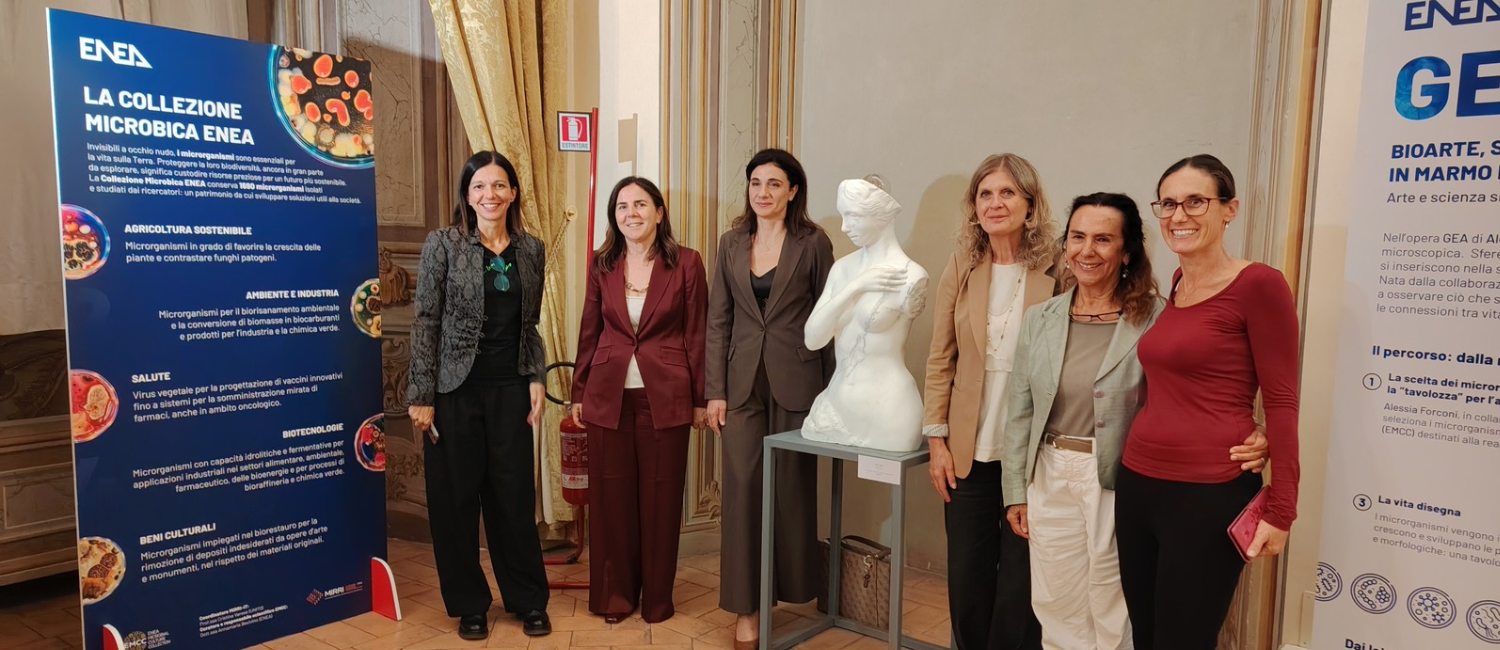
Research on microorganisms met contemporary art at the "è cultura!" festival in Rome (Italy). ENEA, an associated member of the Italian Node of MIRRI-ERIC, participated with the event "A dialogue between art, science, biodiversity and innovation". Bacteria from the MIRRI-IT-associated member were used in a contemporary artwork.
The initiative provided an opportunity for dialogue between scientific research and artistic expression, exploring the role of microorganisms in cultural heritage conservation, environmental protection and the development of sustainable agricultural systems.
Microbial collections as strategic infrastructures
The event organised by the MIRRI-IT-associated member was moderated by Claudia Brunori, Director of ENEA's Sustainability Department, and featured contributions from ENEA researchers Annamaria Bevivino, scientific head and curator of the ENEA Microbial Culture Collection, Silvia Tabacchioni, Patrizia Paganin, the curator of the event, Flavia Tasso and Chiara Alisi.
In her opening presentation, "Safeguarding Invisible Life: Microbial Collections as Strategic Infrastructures for Biodiversity, Research and Innovation", Annamaria Bevivino highlighted the strategic importance of MIRRI-ERIC and MIRRI-IT in conserving and enhancing the value of microbial biodiversity and supporting scientific research and innovation. She also explored the value of the ENEA Microbial Culture Collection (EMCC) in preserving, characterising and providing access to biological resources, promoting their study and applications across various sectors, from the environment to agri-food, from biotechnology to cultural heritage conservation.
The scientific programme also included the following talks: "Microbial Biotechnologies for Sustainable Agriculture", from Silvia Tabacchioni; "Healing the Earth with Microorganisms: When Nature Restores Nature", from Patrizia Paganin; "The Invisible Life of Art: The Role of Microorganisms in Cultural Heritage Conservation", from Flavia Tasso; and "Microbes at Work: New Solutions for Restoration", from Chiara Alisi.
When microorganisms become art
Afterwards, participants visited the exhibition, introduced by Roberto Bilotti Ruggi d'Aragona, which brings together works by various artists and offers an original dialogue between biodiversity, creativity and innovation. Among these is Gea, by Alessia Forconi, a sculpture created using bacteria from the ENEA Microbial Culture Collection, in which microorganisms become an integral part of the contemporary artwork.
The initiative demonstrates how microbial resources can transcend the traditional boundaries of scientific research, opening up new possibilities for interdisciplinary collaboration and helping to raise awareness of the value of invisible biodiversity. Through dialogue between science, art and society, experiences such as this highlight the role of microbial collections and research infrastructures in safeguarding biological heritage and promoting new forms of knowledge and innovation.
The event "A dialogue between art, science, biodiversity and innovation" took place on October 16.
This article was contributed by Annamaria Bevivino and Ombretta Presenti, from ENEA and MIRRI-IT.
- Tags:
- Mirri italy,
- Event
