
Strengthening collaboration: MIRRI-ERIC at the FHERITALE workshop in Bucharest
2025, Oct 31
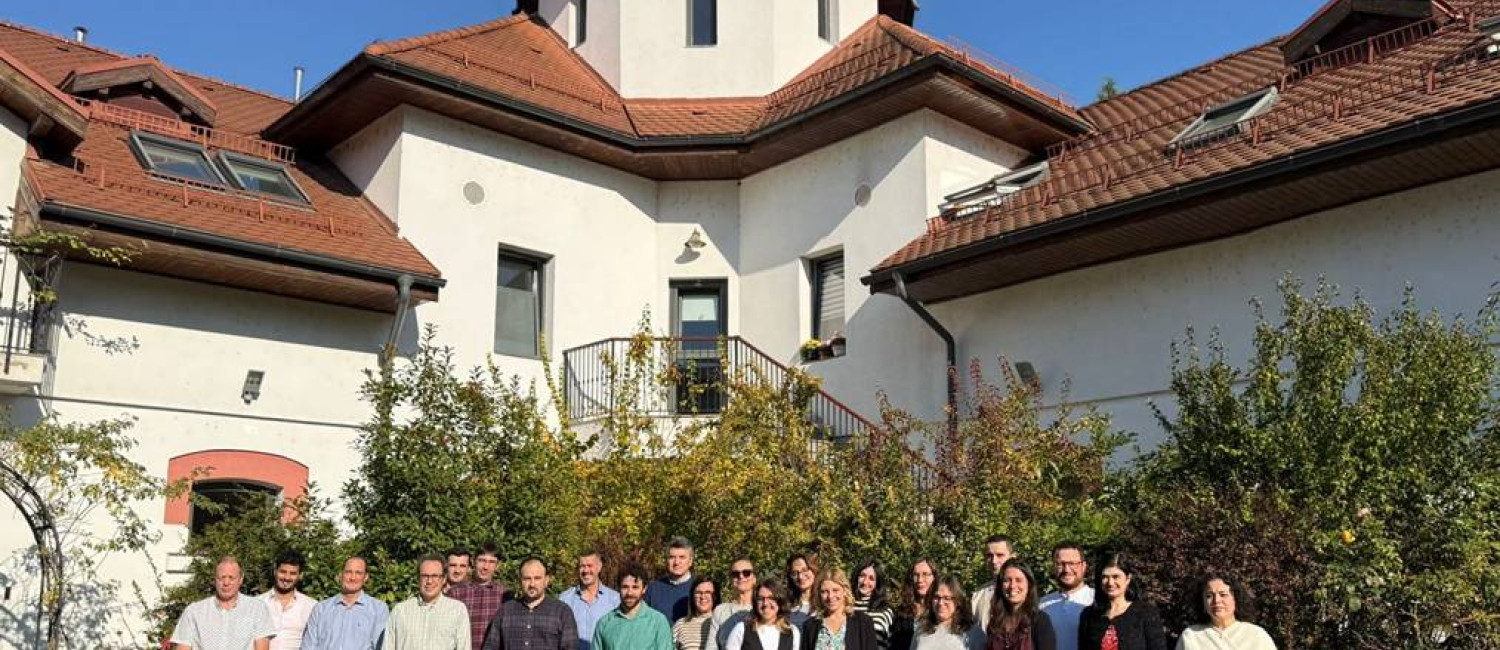
MIRRI-ERIC had the opportunity to participate in the workshop "From mapping to action: a co-creation pathway towards gap identification and thematic clustering" organised by METROFOOD-RO under the umbrella of the FHERITALE project. The event, held in Bucharest, brought together representatives from major European research infrastructures (RIs) to discuss service mapping, identify gaps, and explore future collaboration opportunities.
Representing MIRRI-ERIC, Dalila Fernandes, Project & Financial Manager, delivered a presentation introducing the consortium’s services and highlighting MIRRI-ERIC's growing contribution to the European RI landscape. Her talk showcased examples from Microbes 4 Climate EU Project, MALDIBANK EU Project, and AgroServ, underlining how MIRRI-ERIC's microbial resources and expertise are helping to advance environmental and health research across disciplines.
The workshop combined scientific exchange with networking opportunities. As Dalila Fernandes noted, participants "had the opportunity to combine scientific exchange with networking moments, starting with a social dinner in a traditional restaurant – a great setting to connect with colleagues and other guests of the project". This informal setting fostered meaningful discussions among researchers and infrastructure representatives, strengthening professional ties and paving the way for new collaborations.
Although FHERITALE primarily focuses on artificial materials such as nanoplastics, the sessions revealed points of convergence with MIRRI-ERIC’s work. The Project & Financial Manager explained that many discussions "revealed several synergies with MIRRI-ERIC's work, particularly regarding the environmental and health impacts of these materials and the methodologies used to assess them". The intersection between microbial research and synthetic materials, especially in environmental monitoring and impact assessment, has emerged as a promising area for cross-disciplinary cooperation.
Throughout the two-day event, MIRRI-ERIC’s engagement illustrated its strong role in fostering collaboration within the European RI ecosystem. Dalila Fernandes also took the opportunity to reconnect with partners from other MIRRI-ERIC coordinated projects, such as key collaborators like INSTRUCT, EMBRC, and AnaEE. She reflected that presenting MIRRI-ERIC to such a diverse audience was both "scientifically enriching and valuable for strengthening MIRRI-ERIC's visibility and collaboration within the European RI ecosystem".
About the FHERITALE Project
FHERITALE (Food, Health and Environment Research Infrastructures to Tackle Emerging Priorities) is a Horizon Europe Coordination and Support Action launched in January 2024 and running until 2026. The project aims to enhance cooperation among European research infrastructures, addressing the challenges posed by synthetic materials, including micro and nanoplastics, biotechnological materials, and other compounds affecting both environmental and human health.
Its main objectives include mapping the services and technologies available across European RIs; identifying existing gaps and clustering thematic areas for future collaborative action; developing a shared coordination framework under the "One Health" approach, integrating human, animal, and environmental health; and strengthening interoperability, open access, and cross-domain synergies between infrastructures. By aligning scientific capacities and fostering co-creation, FHERITALE promotes a more cohesive European RI ecosystem capable of addressing emerging environmental and health challenges.
Participation in the Bucharest workshop reinforced MIRRI-ERIC’s commitment to building bridges between life sciences and environmental research infrastructures. Through events like FHERITALE, MIRRI-ERIC continues to play a vital role in shaping the future of European collaboration, ensuring that microbial resources and expertise contribute meaningfully to a sustainable, interdisciplinary research landscape.
About MIRRI-ERIC
The Microbial Resource Research Infrastructure — European Research Infrastructure Consortium (MIRRI-ERIC) is the pan-European distributed Research Infrastructure for the preservation, systematic investigation, provision, and valorisation of microbial resources and biodiversity.
MIRRI-ERIC brings together 47 microbial domain Biological Resource Centres (mBRCs), culture collections, and research institutes from eight European countries and connects an unparalleled collection of over 180,000 high-quality microbial resources from across Europe in a single access point, having its activities particularly focused on the fields of Health & Food, Agro-Food, and Environment & Energy.